Pearson Edexcel · GCSE · English Literature
Understanding the Relationship Between a Text and its Context (AO3) – Component 1
Mastering AO3 (Context) is the secret weapon for top-tier GCSE Literature grades. This guide unpacks how to weave historical, social, and literary context seamlessly into your analysis, transforming good essays into perceptive, Level 6 responses.
- 4 min read
- 2 worked examples
- 4 practice questions
- 8 key terms
Study Notes
Overview
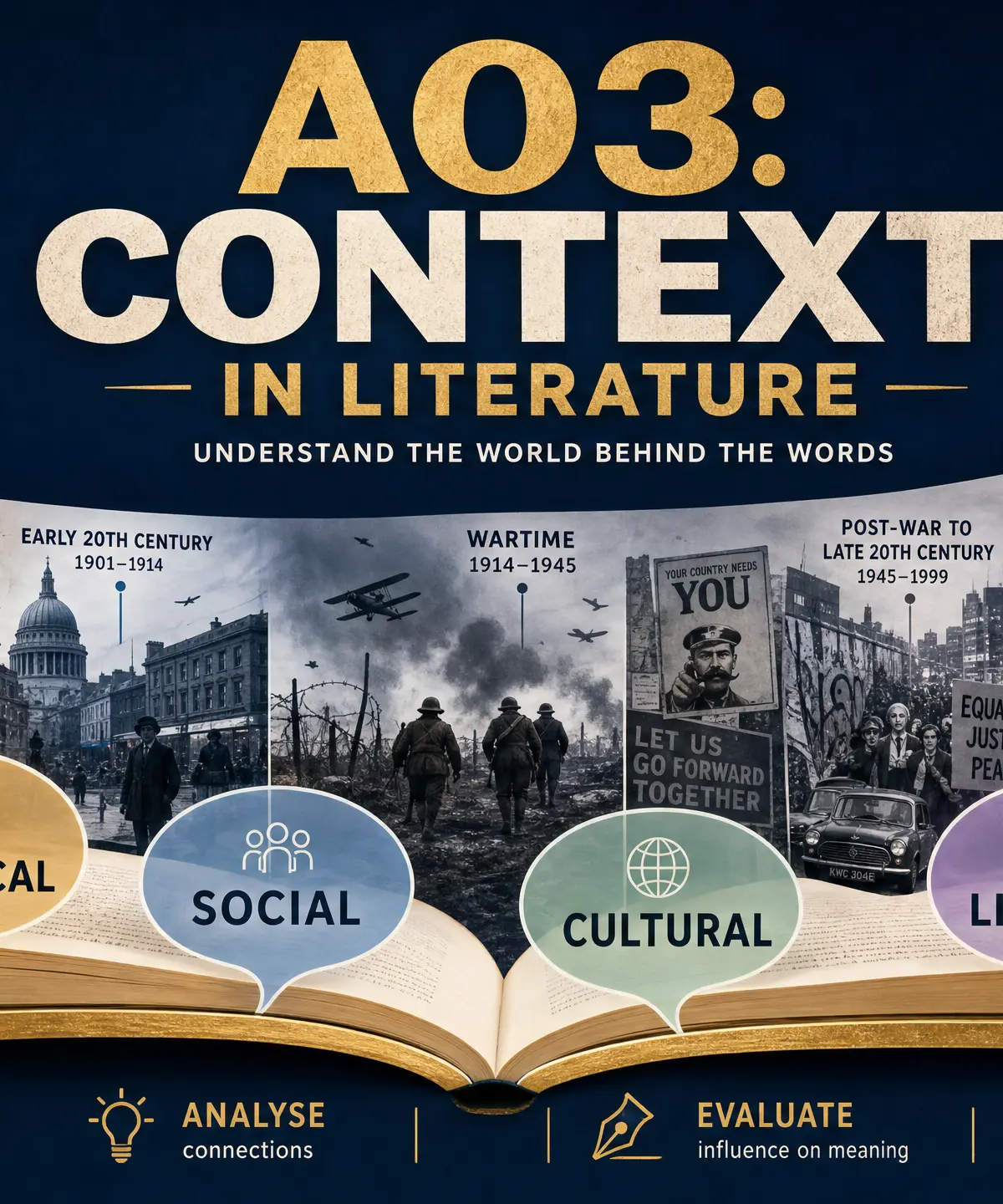
Understanding the relationship between a text and its context (AO3) is a crucial skill in GCSE English Literature, often acting as the differentiator between mid-level and top-tier grades. Examiners are not looking for a history lesson; rather, they want to see how contextual factors—such as the author's life, historical events, societal attitudes, and literary movements—shape the meaning of the text. The most successful candidates integrate this knowledge seamlessly into their analysis, demonstrating how context influences the writer's choices and affects both contemporary and modern audiences. This guide will equip you with the strategies needed to weave context effectively into your essays, avoiding the common pitfall of the 'bolted-on' historical fact.

Plot/Content Overview
While this guide focuses on the skill of contextual analysis rather than a specific text, understanding how to apply context chronologically across any narrative is vital.
- Exposition: Establish the contextual setting. What societal norms or historical realities frame the beginning of the text?
- Rising Action: How do contextual pressures drive the conflict? Are characters constrained by class, gender, or historical events?
- Climax: Often, the climax represents a collision between individual desires and societal/contextual boundaries.
- Resolution: Does the ending reinforce contextual norms, or challenge them? How might a contemporary audience react compared to a modern one?
Themes
Theme 1: Social Class and Inequality
Context is inherently tied to the social structures of the time. Whether analysing the rigid class system of the Victorian era or the shifting dynamics post-World War I, understanding class is essential.
Key Quotes:
- "Context must be woven, not bolted on." - [This applies universally. Ensure any quote about class is immediately linked to the societal reality of the era.]
- "The writer uses [Character] as a microcosm for [Societal Issue]." - [A powerful analytical framework for linking a specific character to broader contextual themes.]
Theme 2: Gender and Power
Many canonical texts explore or challenge the patriarchal structures of their time. Analysing how male and female characters operate within these constraints is a prime opportunity for AO3 marks.
Key Quotes:
- "Writing in a deeply patriarchal society..." - [Use this framing to introduce how a writer's presentation of gender either conforms to or subverts expectations.]
- "A modern reader may view this as empowering, whereas a contemporary audience might have found it transgressive." - [Crucial for demonstrating awareness of shifting audience reception.]
Character Analysis
The Microcosmic Character
Role: Characters often serve as allegories or microcosms for broader societal groups or contextual anxieties.
Key Traits: Their struggles directly reflect historical or social pressures (e.g., poverty, restrictive gender roles, wartime trauma).
Character Arc: Their development usually highlights the writer's critique or endorsement of specific contextual realities.
Essential Quotes: Focus on quotes that reveal their societal standing or their reaction to contextual pressures.
Writer's Methods
Context should always illuminate why a writer used specific methods (AO2).
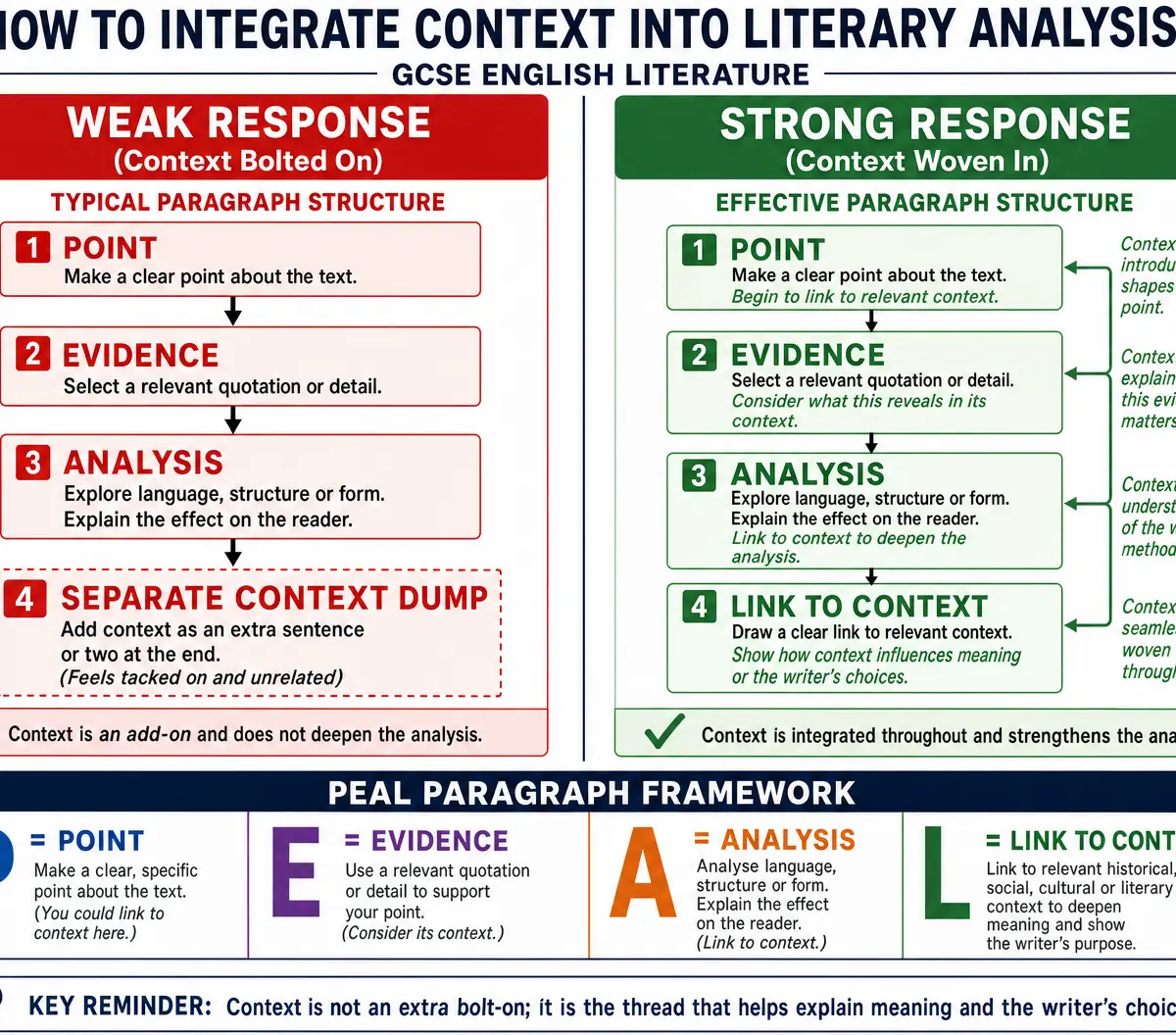
If a writer uses claustrophobic imagery, how does that connect to the restrictive social context? If they use a fragmented structure, does it reflect the chaos of a historical event like war? Always link the method (AO2) to the contextual purpose (AO3).
Context
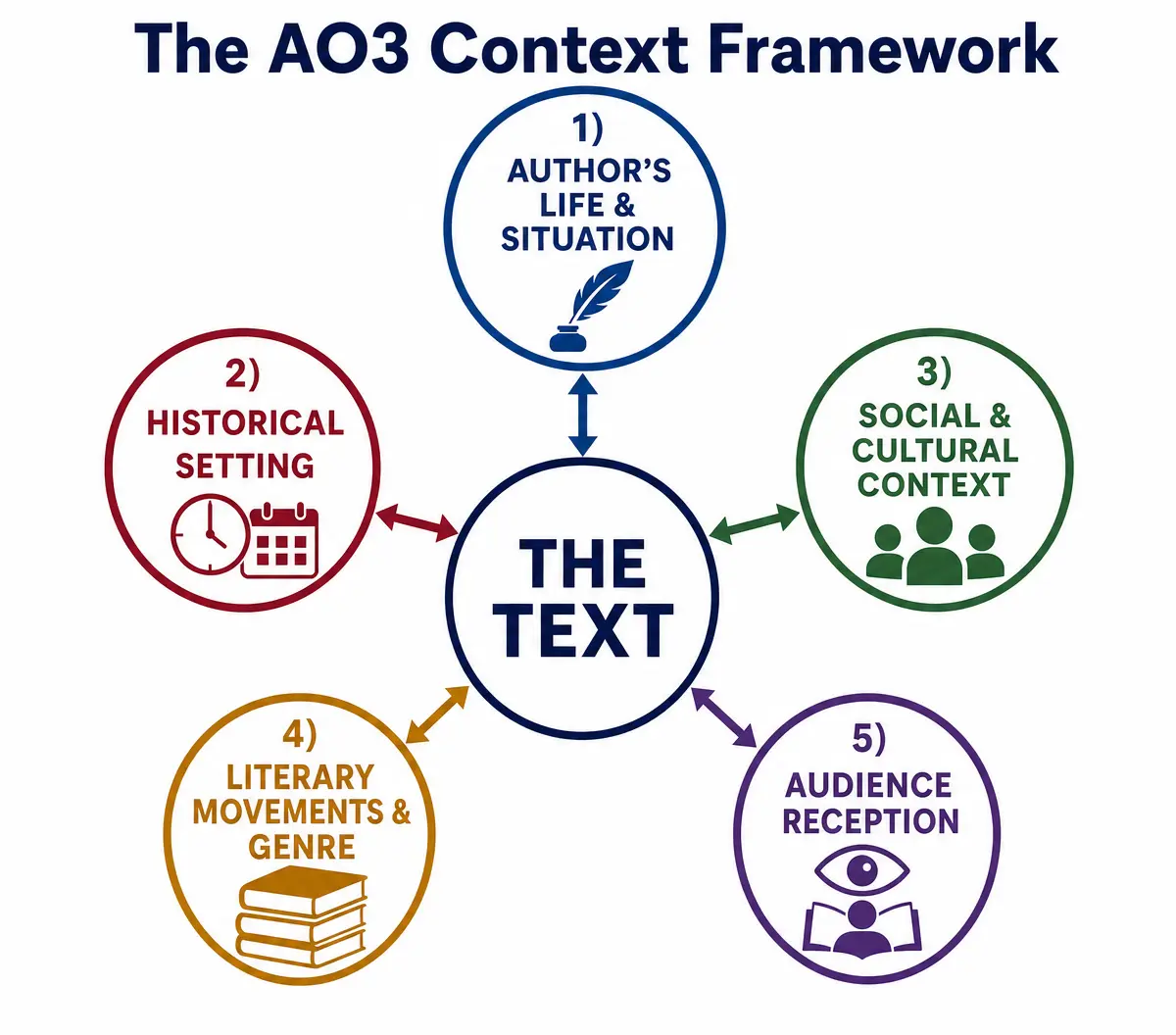
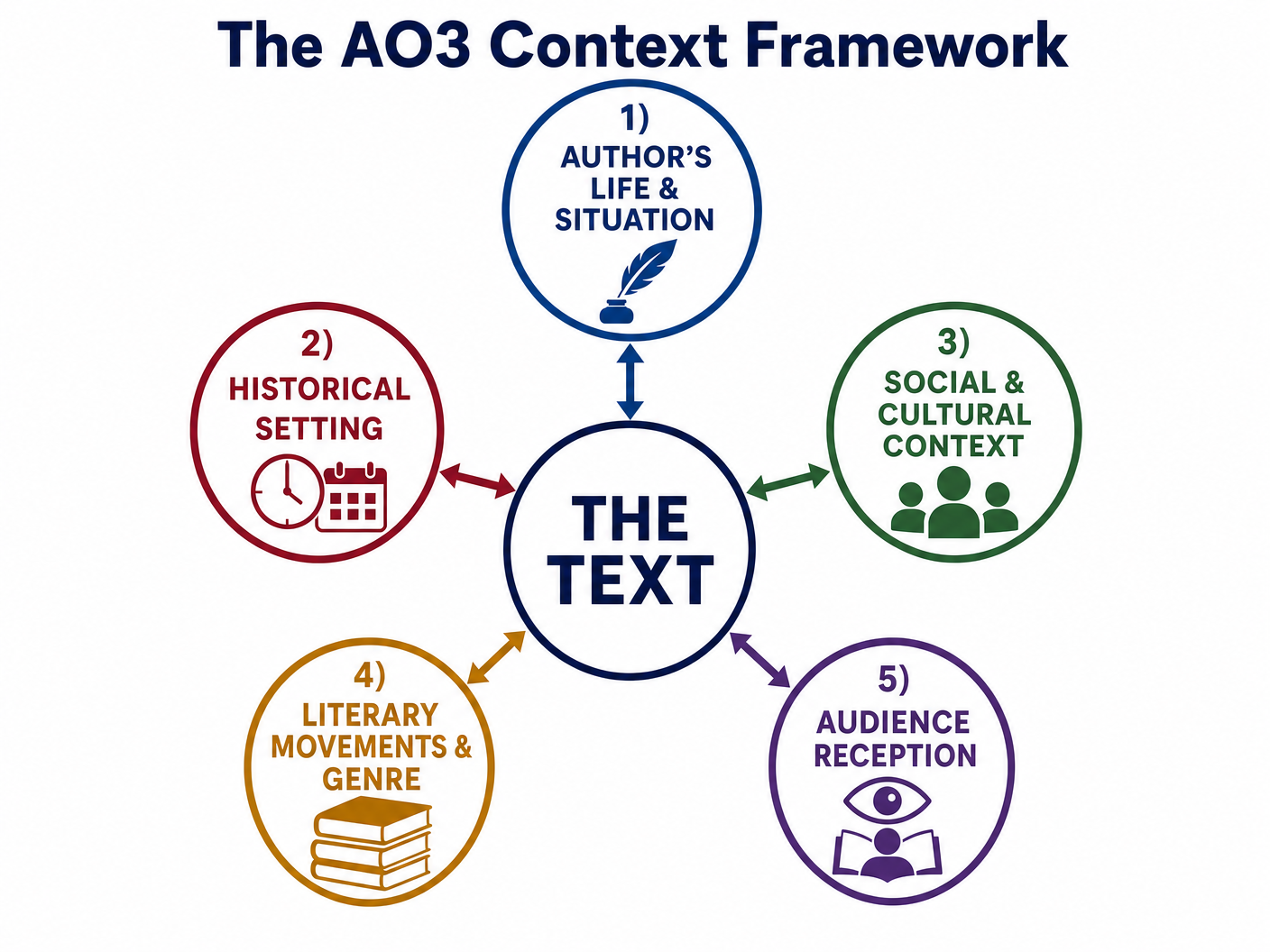
The H-A-S-L-A Framework is your key to AO3:
- Historical: Major events, political climates, wars.
- Author: Relevant biographical details that directly influence the text.
- Social/Cultural: Attitudes, values, gender roles, class structures.
- Literary: Genre conventions, literary movements.
- Audience: How reception changes over time.
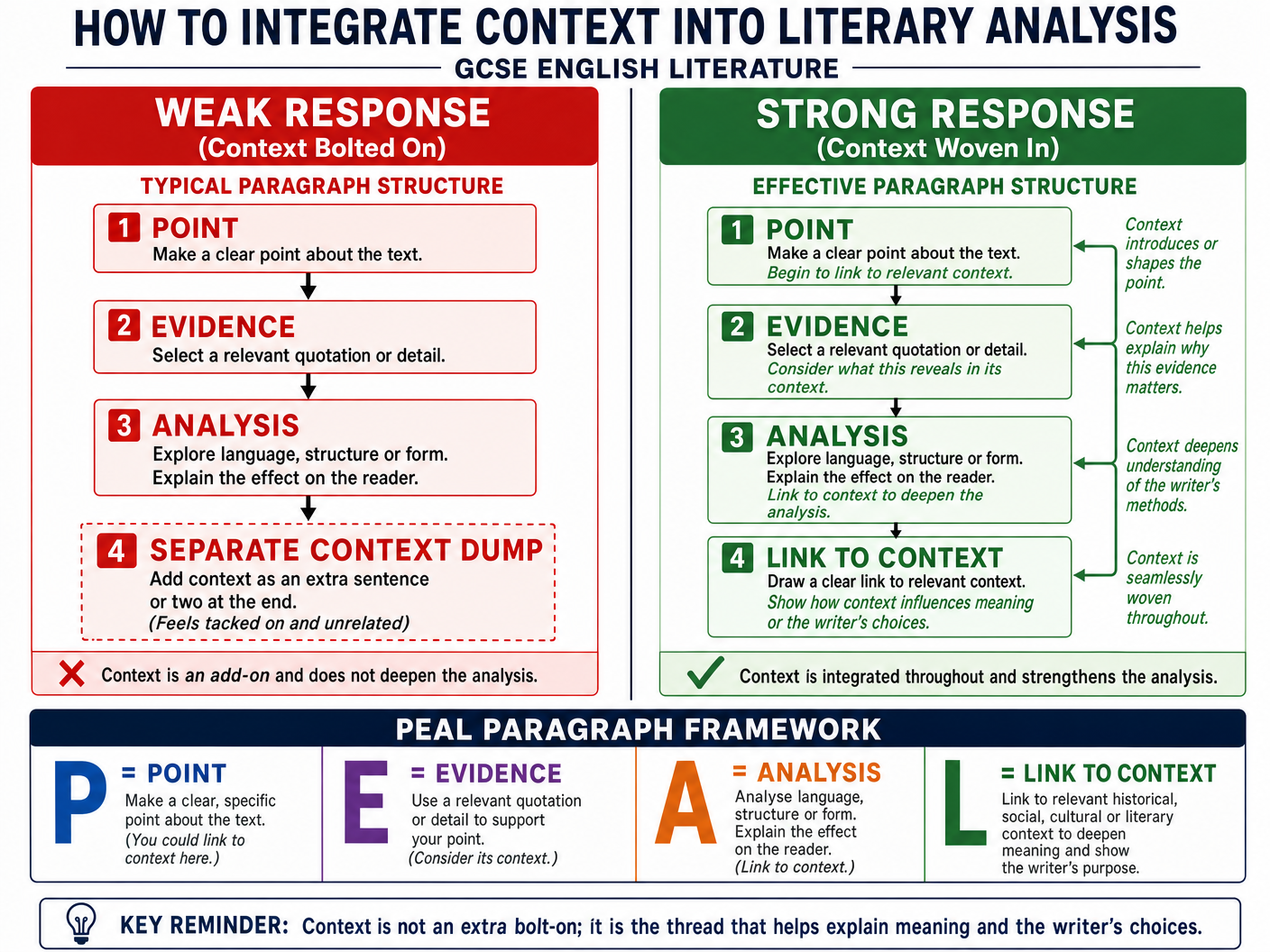
Interactive Diagrams
1 interactive diagram to visualise key concepts
Conceptual Flow Outline
The Process of Integrating Context
Worked Examples
2 worked examples — open one to explore the question and available guidance.
Practice Questions
Test your understanding — click to reveal model answers
Explore how the writer presents the influence of society on individual choices in the text. (30 marks + 4 AO4)
Hint: Focus on moments where characters are forced to act against their desires due to societal pressure. Link this to the specific historical/social context of the text.
How does the writer use minor characters to highlight the social inequalities of the time? (30 marks + 4 AO4)
Hint: Minor characters often serve as microcosms for the lower classes or marginalized groups. How does their treatment reflect the broader context?
Starting with this extract, explore how the writer creates a sense of historical time and place. (30 marks + 4 AO4)
Hint: Look closely at the semantic field in the extract. What words specifically tie the scene to its historical era?
Evaluate the view that the text is primarily a critique of its contemporary society. (30 marks + 4 AO4)
Hint: This requires you to weigh up different interpretations. Is it just a story, or is it a political/social statement? (Hint: it's usually a statement).